The digital landscape is evolving rapidly, and businesses require flexible, secure, and privacy-first solutions that adapt to a variety of use cases. WRCode represents a next-generation framework that enables merchants, service providers, and users to interact seamlessly through decentralized automation. Unlike traditional systems that rely on centralized databases, WRCode offers a modular, trustless approach that gives control back to users while enhancing business opportunities.
WRCode is free to use for all end users, including those who wish to benefit from paperless receipts, rewards, and basic bonuses—without the need for any registration. Some advanced features—such as quick onboarding, fast-lane check-ins, formal invoicing with required business information, or multi-device vault recovery—may require an optional lightweight registration. This registration ensures that both compliance and advanced convenience features can be offered while maintaining WRCode’s core principle of user control and privacy-first design.
The Core: WRCode.org
At the heart of the system lies WRCode.org — the open protocol that powers all WR-branded modules. It serves as the secure, standardized foundation that ensures interoperability, privacy, and flexibility across various industries.
Key Modules Explained
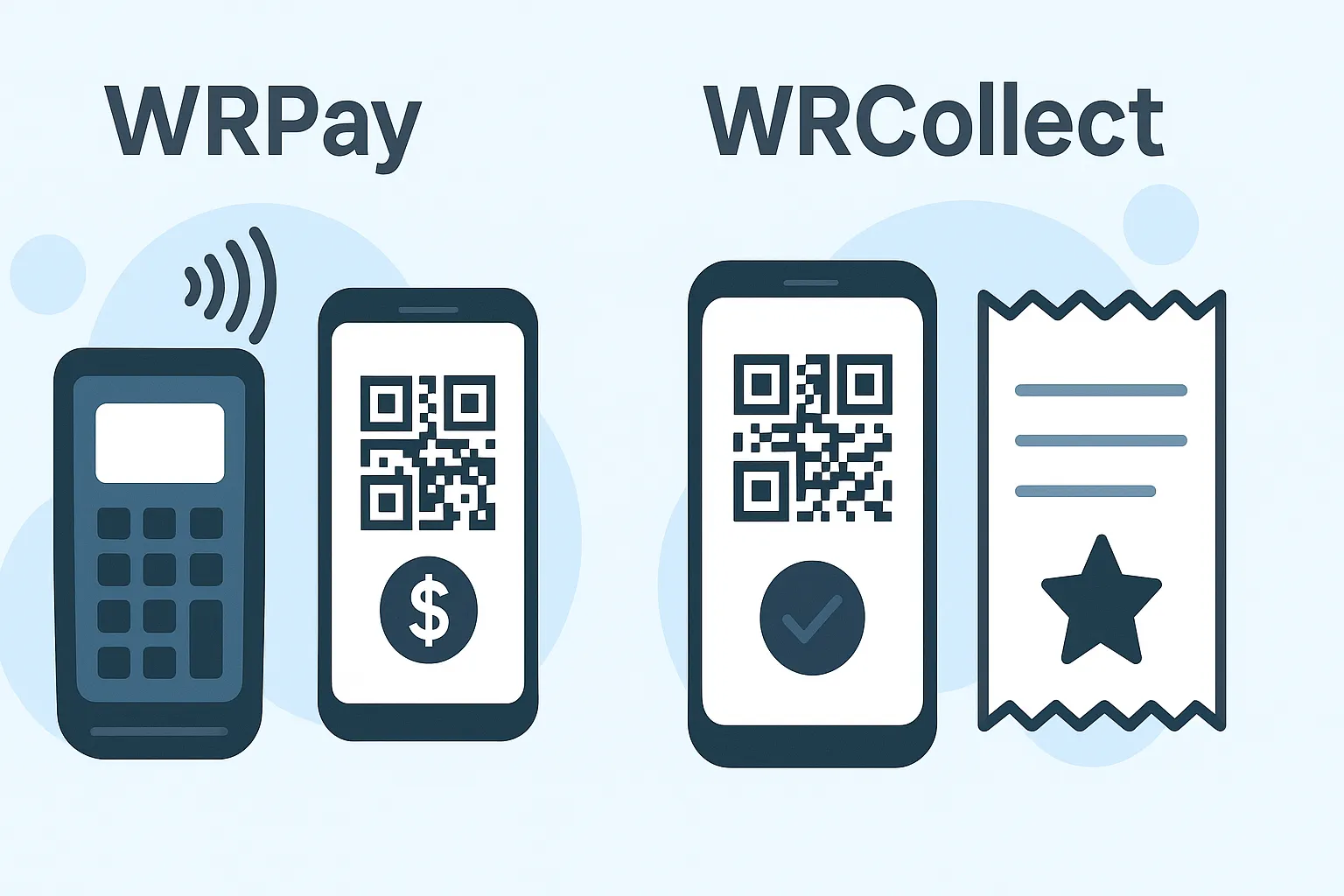
WRPay — Privacy-First Payment
WRPay enables fast, flexible payment solutions that respect user privacy. Whether used for digital transactions or as a paperless complement to cash payments, WRCash eliminates unnecessary data exposure while offering merchants new automation possibilities.
Benefits over traditional payment systems:
Only absolutely necessary data shared
Paperless receipts, eco-friendly
Optional backend automation triggers for tailored experiences
WRCollect — Loyalty & Rewards Reinvented
WRCollect allows businesses to offer dynamic, customizable loyalty programs without intrusive data collection. Customers “collect” benefits, such as discounts, gifts, or exclusive offers, by interacting with WR-enabled merchants. Unlike traditional systems that centralize loyalty data, WRCollect stores information locally or encrypted, keeping user preferences private.
For merchants, WRCollect provides a powerful incentive tool: it enables creative and personalized rewards that go beyond simple points or generic discounts. For example, a customer who spends over a certain amount might receive a free coffee on their next visit or unlock exclusive deals—entirely automated through WRCode without complex backend systems. This could mean: “Collect a bottle of wine on your next shopping trip” or “Unlock a personalized discount after your third visit,” with all interactions remaining privacy-friendly and seamless.
Benefits over traditional loyalty systems:
No central data mining
Interoperable across merchants
Customizable benefits and creative incentives that drive repeat business
Only absolutely necessary data shared
Paperless receipts, eco-friendly
Optional backend automation triggers for tailored experiences
WRPass — Decentralized Identity & Access
WRPass replaces conventional logins and verification methods with a secure, WR-based identity layer. Acting as an on-premise, open-source password manager and verification tool, WRPass enables all types of identity proofs—whether zero-knowledge-based or traditional—depending on the specific use case. Users retain full control over their credentials through a local vault, allowing trustless, secure verification for both digital and physical access while ensuring sensitive data never leaves their device unless explicitly shared.
Benefits over traditional identity systems:
No passwords stored in the cloud
Verifications without revealing unnecessary information
Suitable for digital and physical access control
WRVault — Secure Data Storage
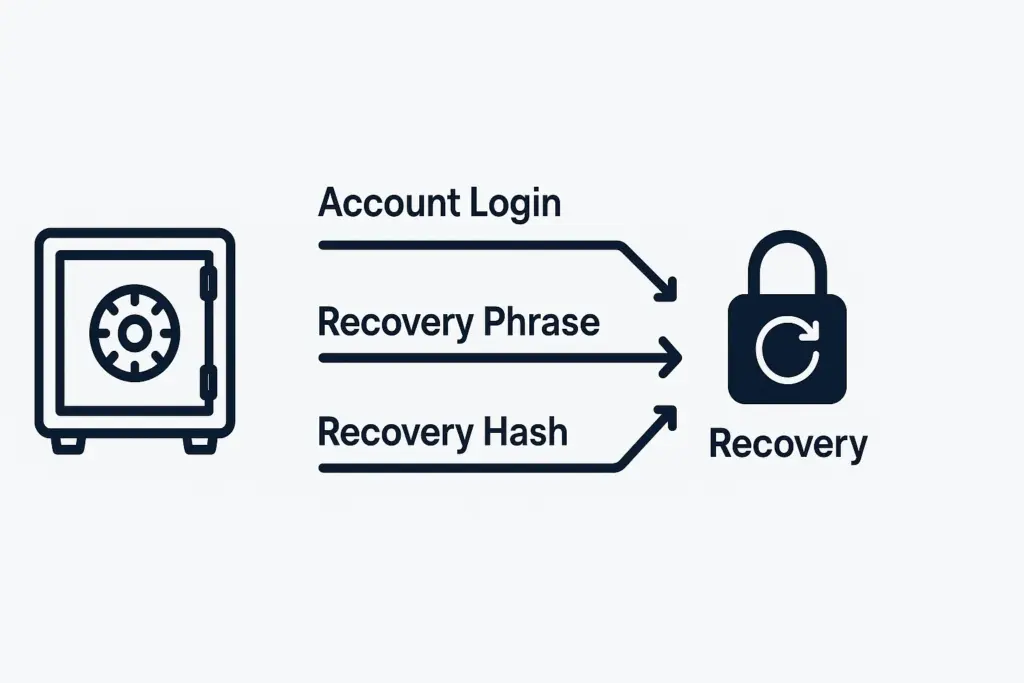
WRVault serves as a private, user-controlled storage space for sensitive data, preferences, or automation keys. Each vault is cryptographically bound to the user’s WRCode account, ensuring that only the rightful account holder can manage, revoke, or migrate vaults. Upon creation, users generate a unique recovery hash, which is stored securely offline (e.g., on a USB stick or printed backup). This recovery hash, combined with account access, is required to trigger any vault revocation or migration process.
To maintain strict security, WRCode.org does not store recovery hashes, passphrases, or vault keys. Only a non-reversible public fingerprint of the vault is optionally stored to allow users to reference and manage their vaults securely. Revocation or migration requests must be authorized both through account login and the presentation of the user-held recovery proof, ensuring that no attacker or insider can trigger revocations without the user’s active involvement.
If both the recovery hash and any optional passphrase are lost, the vault becomes unrecoverable by design—ensuring true zero-trust security without any central killswitch. Even in the unlikely event of a WRCode.org server breach, attackers cannot mass-revoke or access vaults (vaults are store locally anyway), as critical recovery materials are never centrally stored and remain fully under user control.
For advanced users who wish to benefit from more powerful cloud-based AI services, WRVault offers configurable options where users can explicitly authorize selected data to be processed externally. This flexibility preserves the core principles of trustless design and full user control, while allowing tailored experiences for those who opt in.
Both the original structured vault data and any embedded semantic layer coexist on-premise or within a user-selected architecture, maintaining security while unlocking the power of AI-enhanced workflows.
Compliance and Invoicing in WRCode
WRCode enables fully paperless, anonymous invoicing for everyday purchases by default. In most cases, this is legally sufficient and respects the user’s privacy.
When merchants need to issue formal invoices that include regulated data (such as tax numbers or business details), the WR application they use must include the necessary business logic to prompt users for optional data disclosure.
Users can choose to:
Share a zero-knowledge proof identity (email + token) to receive compliant digital invoices.
Share unmasked personal information (PII) if required for bookkeeping or legal reasons.
Or receive an anonymous invoice and add necessary details manually later if they wish to claim business expenses or tax benefits.
The control remains entirely with the user, while merchants retain the ability to meet regulatory needs within their own WR applications.